
JetGo Australia: What went wrong?
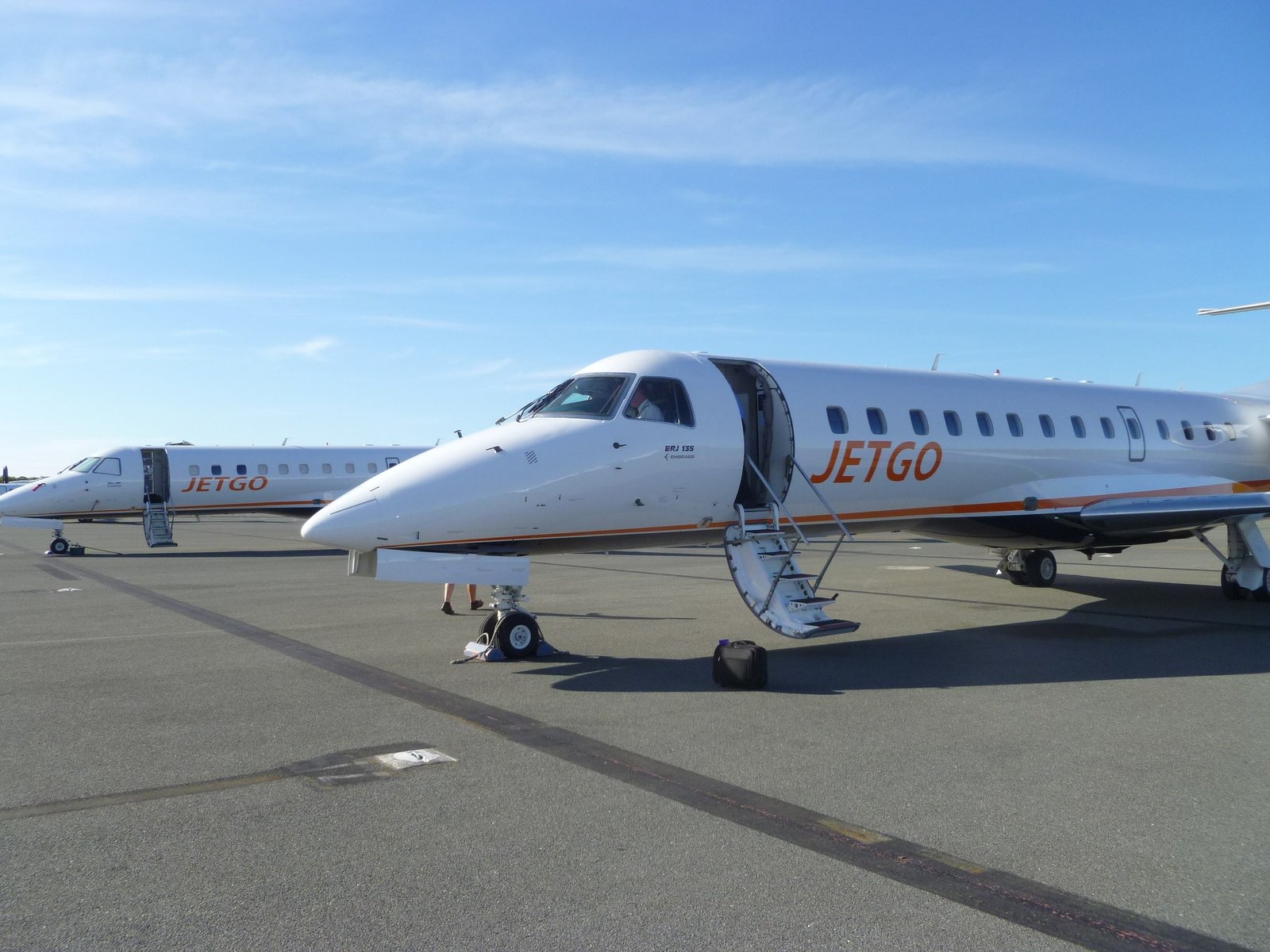
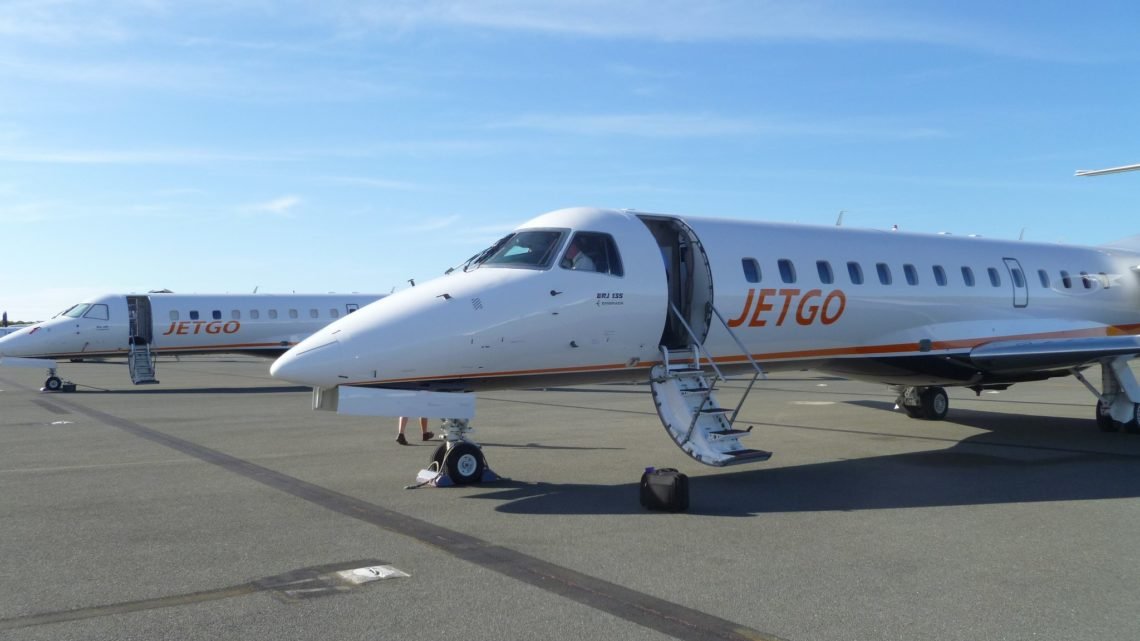
JetGo Embraer E135. Image source: Paul Bredereck [CC BY-SA 3.0] Wiki Commons
JetGo Australia was a regional RPT and FIFO air charter airline based at Eagle Farm, Queensland in Australia. On June 1 2018, management suspended all flights and placed the airline into voluntary administration. What went wrong?
JetGo’s founders saw a niche in the market to service Fly-in Fly-out (FIFO) charters for the mining and resources community. The strategy was to target competitors that were currently operating 36 to 50-seat turboprops with its Embraer Regional Jets. Australia has a thriving FIFO airline industry, separate from RPT airlines.
With a large mining and construction industry operating in remote and regional locations throughout the country. All the FIFO airlines in Australia operate older narrow body jets. British Aerospace BAE 146 and Fokker F100 aircraft seating from 70 seats or more and turboprops seating 36-50 seats.
JetGo took delivery of its first aircraft, a 37-seat Embraer 135LR aircraft in March 2012. the company received its Air Operator’s Certificate (AOC) by the Civil Aviation Safety Authority (CASA) in May of the same year.
Australian FIFO market analysis
In Australia, the mining and resources industry is dominated by nine major regions (see Fig 1.). The largest being Western Australia (iron ore, gold, copper, lithium, and coal) and Queensland (coal and gas). The success of the industry is one of the main reasons why Australia avoided the global financial crisis in 2008. Over the years, the construction industry FIFO market had been growing throughout regional Australia, spurring a new FIFO air service requirements.
The FIFO market is estimated to be approximately 200,000 workers from throughout the mining, resources, and construction industries. Air services operate on a weekly, fortnightly, or monthly schedules. Queensland and Western Australia are the largest markets, where airlines operate bases from each state’s capital.
Secondary bases are in operation throughout Queensland and Western Australia by several airline operators.

In recent times, several studies have researched the effects on FIFO work arrangements and the effects on their families. The findings found that there is a greater risk of mental ill health amongst those workers operating under FIFO work arrangements. The findings have alarmed the Queensland government resulting in the introduction of a ban on FIFO workers on large projects. Encouraging the mining and resources sector to employ local and indigenous people that reside near mining projects.
Regional communities in Queensland have embraced the FIFO phenomena, as they view it as an opportunity to grow their communities.
FIFO: A testing charter market
JetGo’s product offer was appealing to mining companies as the Embraer Jets were more comfortable and faster. In comparison, their competitors were operating 36-50-seat turboprop aircraft like the De Havilland Dash 8-200/300 aircraft that are noisier, uncomfortable, in-efficient, and slower.
As new FIFO contacts were won, their market share grew, and the success resulted in JetGo adding additional Embraer 145 jets to its fleet.
In 2018, JetGo concluded a charter contract with the City of Karratha to operate Brisbane-Karratha-Singapore charters. The services would be operated by leased ex-Virgin Australia Embraer E190 aircraft to support the mining and resources industry. The contract was an ACMI contract with profit sharing if the routes made a profit. The City of Karratha bears all the commercial risk associated with this contract.
FIFO and ACMI contracts was a profitable and successful segment for the airline.
Regular public transport (RPT)
Having won a steady stream of FIFO contracts, JetGo saw an opportunity to launch RPT services using the spare capacity of its fleet. The plan was to grow the fleet to 10 aircraft. The focus was on longer regional routes in Queensland and New South Wales of 400 km to 1,200 km. Its competitors couldn’t compete with their outdated in-efficient turboprops.

In October 2014, CASA approved JetGo’s RPT licence. The airline announced the launch of scheduled services from Sydney (SYD) to Roma (RMA) and Tamworth (TMW) for November 2014. Poor initial sales and constant delays led to the Roma service never being launched.
Niche regional routes
December 2014: JetGo launched double daily Sydney (SYD)-Gladstone (GLT) services with an Embraer E145LR. Management was confident it could make it work. QantasLink operated the route with a Bombardier Dash 8-Q400 (74-seats, 5-times weekly).
JetGo cancelled the route after just three months of services citing low acceptance from corporate travellers.
March to September 2015: JetGo launched services from Brisbane (BNE) to Tamworth (TMW), Dubbo (DBO), Townsville (TSV), Rockhampton (ROK) and the Gold Coast (OOL) with its 36-seat Embraer E135 aircraft.
October 2015: JetGo launched a 3-times weekly Melbourne (AVV)-Dubbo (DBO) service. The service was switched to Melbourne-Essendon (MEB) airport and as an add-on to the Brisbane (BNE)-Dubbo (DBO) service.
June 2016: JetGo launched Brisbane (BNE)-Albury (ABX) services with 4-times weekly 36-seat Embraer E135 aircraft.
Where did it all go wrong?
The rapid expansion of routes and increasing frequencies proved to be a fatal strategy by management. Not even heavy discounting could stimulate routes enough to reach break-even.
Operating regional RPT’s in Australia can be a challenge for any airline. The nature of Australia’s vast distances between regional cities and state capitals require aircraft with long legs. Regional routes are thin, and in most cases require subsidies to make them viable. State governments regulate who can fly on routes within each state. Launching exclusive route licence competitions with discounts and subsidies is rare and only offered on the thinnest routes.
Qantas and Virgin Australia operate feeder services from regional cities to state capitals. With several smaller operators operating niche regional routes. By far the largest regional airline in Australia is Rex Aviation. The airline operates a fleet of 92 aircraft, 60 of which are SAAB S340 aircraft. Operating a network throughout regional Australia, except for the Northern Territory. The bulk of Rex Aviation’s services are within state boundaries with limited cross-border regional-to-regional city pairs.
JetGo’s strategy was to operate RPT services from capital cities to regional cities in other states, a niche market. Some routes were profitable, unfortunately others required more stimulation and there was no competition from other regional airlines.
Management’s business strategy was sound, execution was problematic. JetGo increased frequencies after initial launch. Routes were not breaking-even. They used heavy discounting tactics to lower prices and stimulate the market, and often at below cost. The other issues were high pricing structures of regional airports that hindered the airline’s ability to stimulate the market.
Maintenance issues
JetGo had limited internal maintenance capability and spares for its fleet of aircraft. The airline used the services of an executive jet maintenance provider, that was unfortunately not capable of maintaining RPT airline operations.
One aircraft was reportedly out of circulation for six months awaiting service. Engines were out of service for up to one month. Quoted costs of repairs experienced 100% increases in budget which all resulted in a strained relationship with its maintenance provider.
Based on this information, we can only assume that JetGo’s maintenance provider expected payment up front for its work. The airline was growing aggressively and not generating enough revenues to maintain its fleet.
Flight cancellations in the final year of operations resulted in angry passengers with a backlash on social media. The airline simply didn’t have the aircraft and resources to operate the large RPT network.
As aircraft were dropping out of service with management struggling to operate their profitable RPT routes and FIFO charters. Barely generating enough revenues to service its debts, management realised they had to find new investors to stop the financial spiral.
Search for new investors
Realising they had major cash flow problems, the owners began to search for new investors to help the airline return to profitability. In May 2017, the owners were successful in sourcing an Asian investor group to take a 60% holding in the company for $16.4 million, effectively selling control of the company. The deal was only partially completed with only $8.5 million paid, the remaining amount failed to materialise. Unfortunately, the airline’s saviour encountered internal issues and couldn’t complete the transaction.
In May 2018, the Dubbo council, launched court action (Wind Up proceedings) in the Supreme Court of New South Wales against JetGo for unpaid passenger taxes totalling $272,000. The airline disputed the amount saying it did not represent the contracted terms in their partnership agreement.
JetGo’s management sought to stave off the proceedings by voluntarily placing the airline into Administration to give it time to secure new investors and shore up its finances.
Following an administrators report compiled by Jonathon McLeod, the airline was found to have been trading whilst insolvent since at least June 30, 2016’. The report to creditors showed the airline owed about $38 million to creditors. About $25 million of that sum was finance leases for the Embraer E135/145.
The windup proceedings in the Supreme Court came to a head on June 15 and the courts gave the administrators two weeks to secure new investors. The administrator failed to secure new investors and on July 5, 2018 and the courts appointed a liquidator.